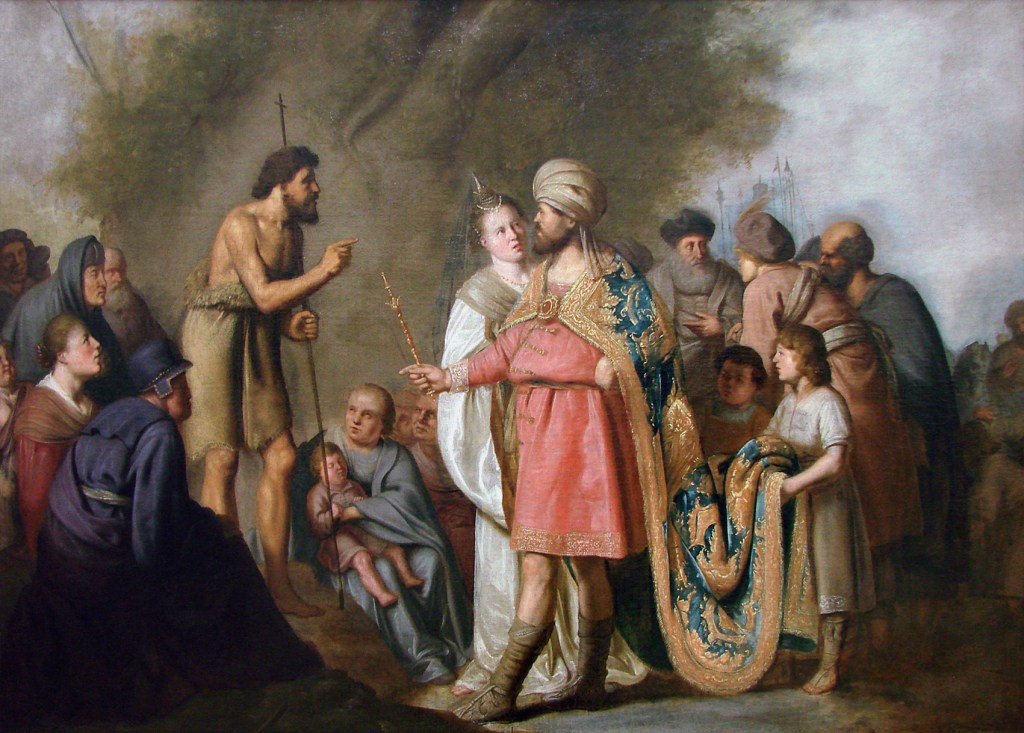
In Matthew 3, there’s an unusual detail provided about the prophet John the Baptist, and I can’t help but wonder what we’re supposed to take from it.
Matthew 3:4 – NET
Now John wore clothing made from camel’s hair with a leather belt around his waist, and his diet consisted of locusts and wild honey.
Most of the passage focuses on John’s message and then the baptism of Jesus, so what are we to make of this one verse that points out his clothing and diet? I think the author includes this detail to contrast with what his First Century readers would know about the Sadducees and Pharisees.
An Unassuming Prophet
Pharisees and Sadducees were among the most influential Jewish religious leaders during John’s ministry. They differed over some theological matters. For example, my understanding is that Pharisees valued both the written Torah and oral traditions collected in the Talmud where the Sadducees only adhered to the written law. Additionally, as Paul will exploit years later in Acts 23, Pharisees believed in an afterlife where the Sadducees did not. One thing they did have in common was that you knew them when you saw them.
Both sects had distinctive robes and other paraphernalia that set them apart from everyone else. You looked at a member of either of these groups, and you saw someone who looked like a religious leader. In contrast, John the Baptist looks impoverished, dressed in goat hair and eating locusts. Could you image locusts being served at Nicodemus’ table (John 3)? John had a far humbler demeanor than the other religious leaders of his day.
A Humble Prophet for a Humble Messiah
John didn’t look the part of a great teacher, nor would Jesus look the part of a Messiah. Jesus didn’t come in fine robes. His only crown was one of thorns. He rode into the city on a donkey as opposed to a war horse. He taught gentleness and forgiveness over conquest and vengeance. He wasn’t the conquering king some might have wanted, and John mirrors this humility.
John and Jesus should both challenge us in where we look for God. Do we look for God in the midst of pyrotechnics, massive arena-filling events, and multi-millionaire celebrity preachers? Do we seek Him in halls of power, among leaders who will carry out vengeance on our behalf, in symbols of nation and might?
Or do we seek him at the margins? Do we see Him in a starving child, a frightened refugee, an unhoused person dependent on the kindness of others? Do we look for signs of might and popularity when He’s calling to us from the wilderness to repent? Sometimes, I fear we’ve started looking for our Messiah in all the wrong places, seeking after a mighty figure crafted in our own image rather than conforming to the image He’s provided us.
Matthew 5:3-12 – NET
“Blessed are the poor in spirit, for the kingdom of heaven belongs to them.
“Blessed are those who mourn, for they will be comforted.
“Blessed are the meek, for they will inherit the earth.
“Blessed are those who hunger and thirst for righteousness, for they will be satisfied.
“Blessed are the merciful, for they will be shown mercy.
“Blessed are the pure in heart, for they will see God.
“Blessed are the peacemakers, for they will be called the children of God.
“Blessed are those who are persecuted for righteousness, for the kingdom of heaven belongs to them.
“Blessed are you when people insult you and persecute you and say all kinds of evil things about you falsely on account of me. Rejoice and be glad because your reward is great in heaven, for they persecuted the prophets before you in the same way.”
 Simply Gospel